

Revisional Bariatric Surgery
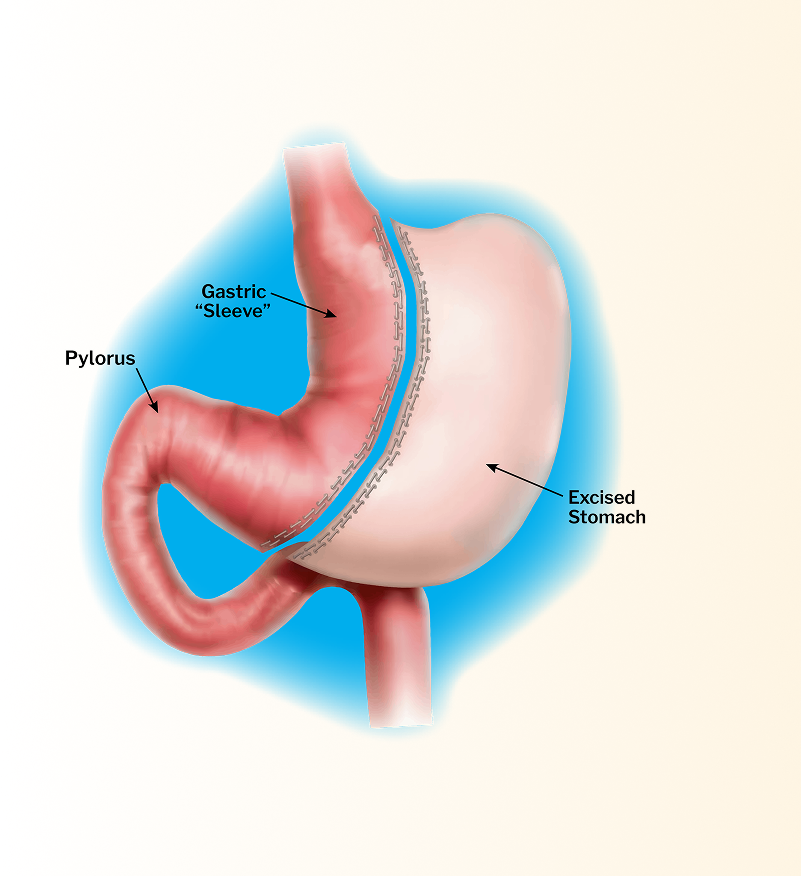
The sleeve gastrectomy allows us to remove about 70-80% of the stomach to help in weight loss in a primarily restrictive way. The stomach is smaller so you get full quickly and you therefore eat less. A normal sized stomach on average is about 1 Liter to 1.5 Liters. Imagine the large drinks we get when we order pizzas. After a sleeve gastrectomy, the average size is about 4-6 ounces or about ½ cup to ¾ cup of food if I was used a measuring cup to cook with.
Due to most of the stomach being removed that houses the hormone, ghrelin, that is responsible for hunger and satiety, a lot of patients tell me that they are no longer hungry anymore and that they have to remind themselves to have a meal.
Sleeve gastrectomies can maintain their nutrition by eating 3 meals a day, 1 snack and a regular multivitamin or a bariatric multivitamin depending on your individual nutrient needs.
Average weight loss is 60% of excess body weight loss
Best candidates for sleeve gastrectomy:
BMI: 35-45.
No prior heartburn or acid/bile reflux
Can take multivitamins daily
Learn How It Works
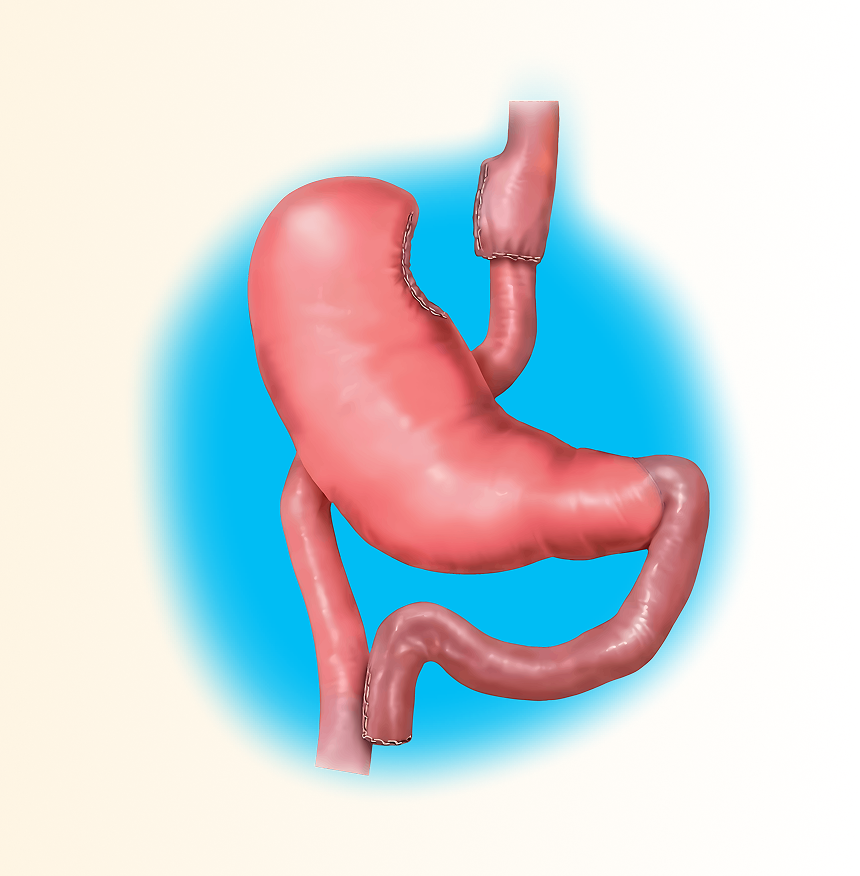
The gastric bypass is one of the oldest operations in bariatric surgery. It is a weight loss tool that helps you lose weight by restricting what you can eat as well as not allowing you to absorb everything that you ingested because the intestines are re-routed. The gastric pouch allows on average about 2-3 ounces of food. This is about ¼ cup of food only. The remnant stomach is the remaining stomach that the gastric pouch is made from. It is usually left behind, and it is safe to do so. No, you do not need it. The remnant stomach can be used in the future if the procedure needs to be reversed.
Average weight loss is 70-80% of excess body weight loss.
Best candidates for gastric bypass:
BMI 35-50. There are some patients with BMI over 50 that we may accept doing a gastric bypass on due to reflux even if the weight loss will not be as great. We will discuss this at your appointment.
Heartburn or acid/bile reflux.
Must be able to take bariatric multivitamins daily or a regular multivitamin with additional supplementation of iron and Vitamin B12.
Learn How It Works
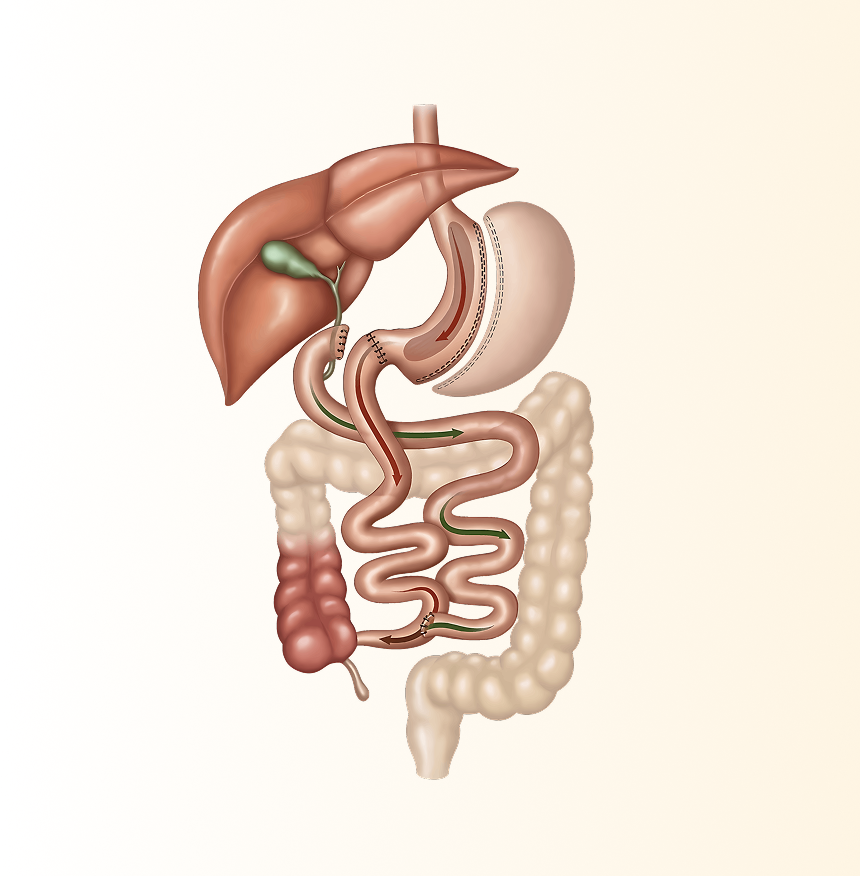
This is a surgery not commonly done but picking up in popularity due to the magnificent weight loss it can achieve for patients with high BMIs or severe morbid obesity. This surgery is where the sleeve gastrectomy was born from. It is a sleeve plus re-routing of intestine. It is more re-routing of intestine than the gastric bypass, so food gets to the end of the small intestine faster and therefore less of the food you consume gets absorbed.
You are able to eat the same 4-6 ounces of food that a sleeve normally holds, however most people getting a BPD-DS will have a larger sleeve done on purpose in order to allow for more capacity to eat more protein that this surgery requires so the capacity may be closer to 6-8 ounces for some people.
Due to the food getting to the end of the small intestine faster, patients will experience more bowel movements.
Best candidates for biliopancreatic diversion with duodenal switch:
BMI greater than 50
Must be able to take bariatric multivitamins daily and possibly additional supplements.
One key feature of duodenal switch for patients with diabetes is that due to the food getting to the end of the small intestine so fast it triggers the body’s natural release of GLPs which helps with resolution of diabetes for many patients within 1-2 days after surgery, even those on daily insulin. These patients are closely monitored by their primary care physicians, endocrinologists, and nurse practitioners post-surgery to ensure their blood glucose levels are not too high or too low due to changes in medication needs.
Learn How It Works
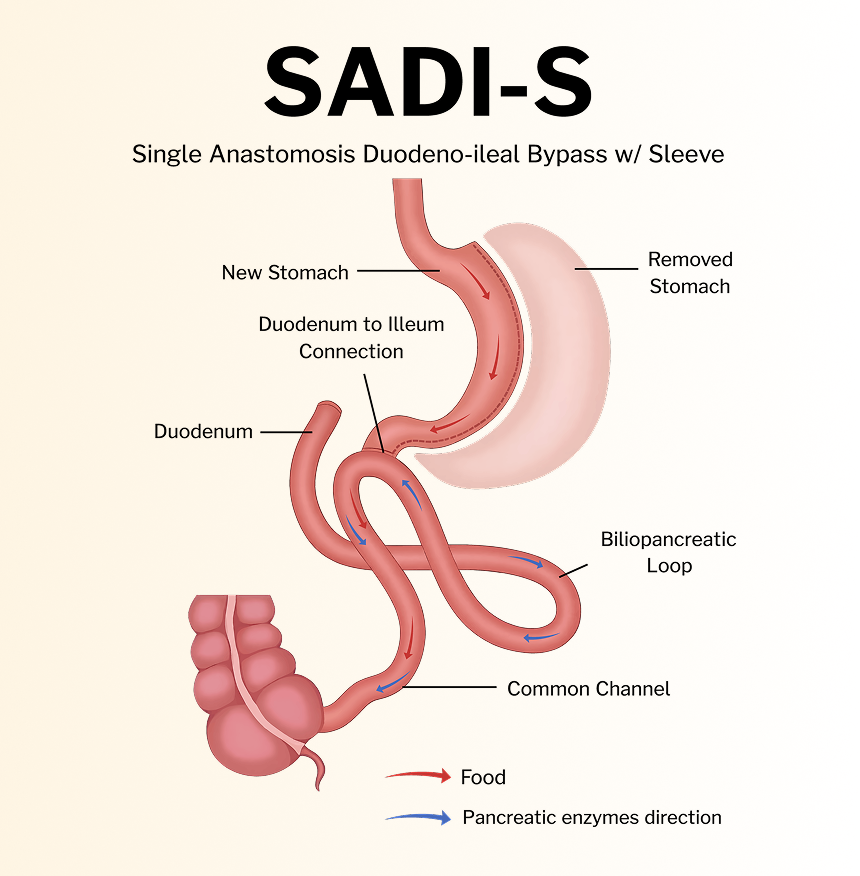
This operation was derived from the duodenal switch. The main difference is that instead of two intestinal connections, only one is done. The single connection allows for more intestine to absorb more food and nutrients, however still far less food and nutrients than if the intestine was not re-routed. Patients will still need to take bariatric multivitamins and it is still recommended for patient with a BMI of 50, but can be recommended for people with BMI 45+, especially if they have diabetes mellitus.
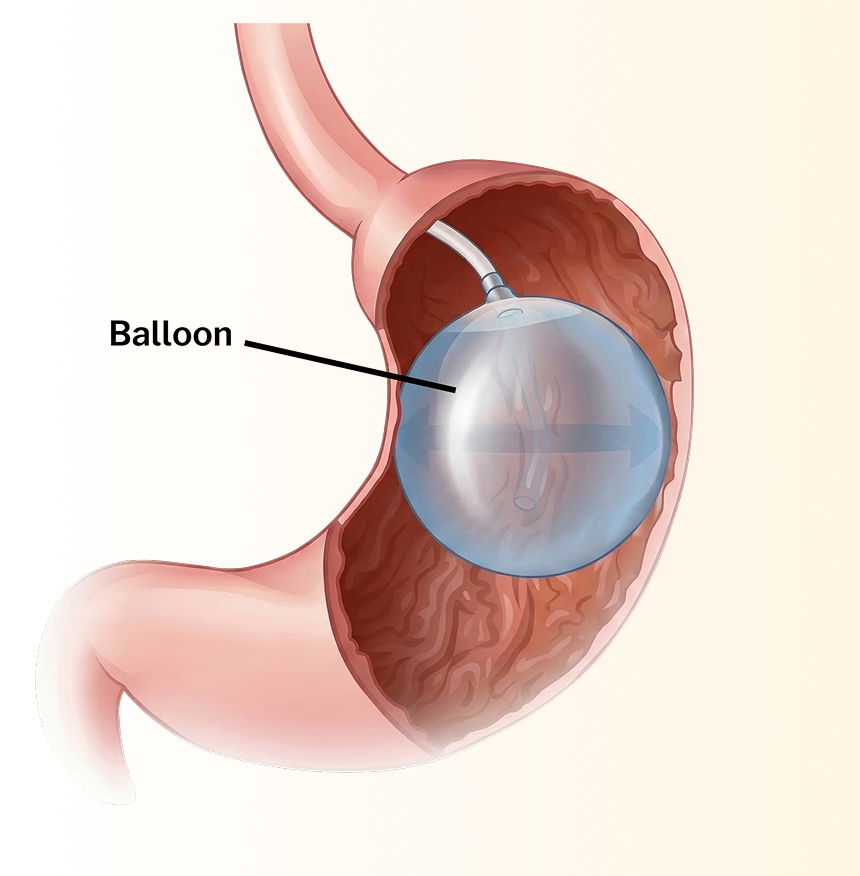
Endoscopic balloons work by being space fillers that allow you to only eat a small amount of food before getting full. They are temporary and cannot be left in place more than 6months. There are some versions that can stay up to 12 months.
Learn How It Works
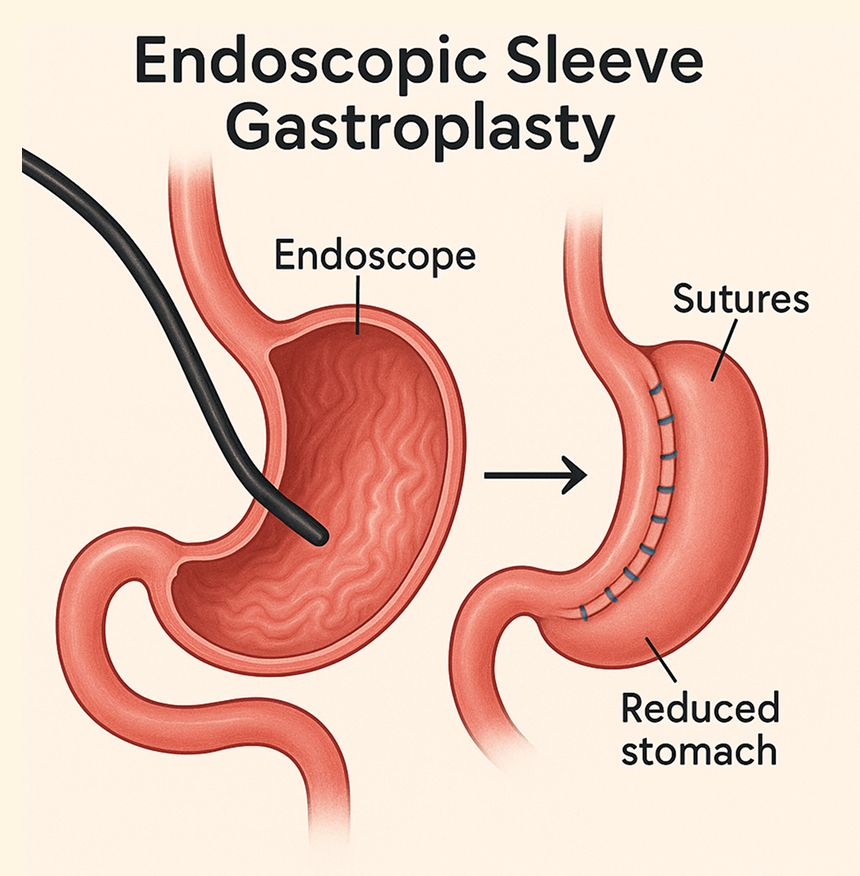
ESG is done by using an endoscope. It uses a device to suture the stomach onto itself to decrease the size of the stomach by 70-80%. It is similar to a sleeve gastrectomy in minimizing the size of the stomach, but not as small as the sleeve gastrectomy. There are no incisions on your skin as this done through a camera through your mouth. Most people are back to work in 2-3 days after the procedure.
Learn How It Works
Transoutlet Reduction
TORe is used in gastric bypass patients to help restore the size of the opening between the stomach pouch and the small intestine to its original restrictive state, reducing food intake and supporting significant, lasting weight loss.
Learn How It Works